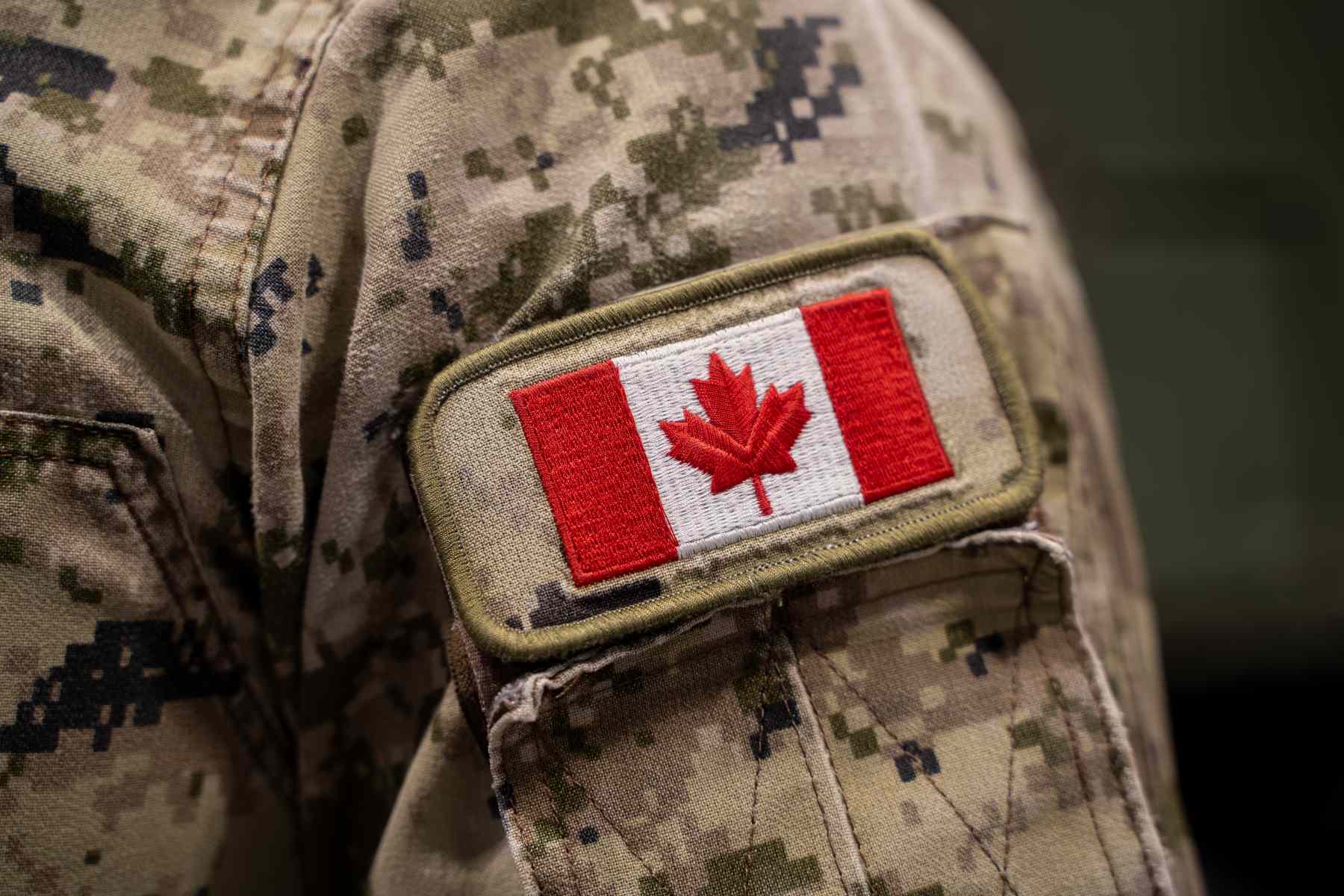
In less than two years, from the time when Donald Trump’s second term as president began, the idea of needing to protect Canada’s sovereignty went from something seldom thought of to being a focal point of our nation’s social and political conversation. It has also become the guiding principle for our government’s policies. The country suddenly found itself vulnerable in a way we have not experienced in our lifetime.
In this context, there is no question that Canada needs to take urgent measures to protect our sovereignty. To do so, Canada is implementing a host of measures aimed at defending its independence, its territory, its economy, its citizens, and the integrity of our institutions—including our electoral processes—from threats by outside forces.
While this shift to a sovereignty-focused approach is necessary, it should be treated as a “necessary evil” undertaken only with great caution. Dedicating our national attention to sovereignty has risks. At its best, the sovereignty Canada is pursuing can be a healthy exercise focused on nation-building, unity, the pursuit of new opportunities for our economy, and a renewed approach to engaging the world; at its worst, sovereignty is a gateway to hyper-nationalism, militarism, isolationism, diminished prosperity, and a pattern of rights violations.
As we work to defend our sovereignty, therefore, it is imperative that we do not lose ourselves in the process.
The renewed focus on sovereignty has changed everything—from the way we think about our economy to the priorities of our international diplomacy to what we buy at the grocery store. When a country persistently takes actions built around a certain organizing principle, its way of thinking about the world changes shaped by those actions. What makes this so problematic is that it is gradual, incremental, and, in a way, insidious. We likely won’t even notice it happening.
When shifts are gradual and subtle, our mental goalposts for what is normal and acceptable get moved; we don’t realize how far we’ve shifted because we lose track of where we started. Experts call this “shifting baseline syndrome,” and it is seen in all sorts of human behaviours, from ethical values to adoption of technologies to our evaluation of ecosystem health.
These shifts can involve a degree of cognitive dissonance, where we refuse to acknowledge to ourselves that a shift in our thinking has occurred; when directly confronted with a question about our values, we may profess belief in a given principle, despite the fact that our actions and opinions reveal that we have, in fact, shifted away from that principle. We may rationalize these decisions as not being at odds with our values, even though, objectively, they are.
Canadians may continue to think that we are a society that welcomes outsiders, even if we begin to display behaviours and support policies that have practical effects to the contrary, justifying those policies as necessary given the current circumstances. Defending sovereignty can sometimes mean ignoring and setting aside our country’s central character, including our fundamental commitment to democracy and human rights.
The changes may include treating the world as a “threat environment,” where foreign states and their actions are treated with a high degree of suspicion and evaluated, first and foremost, as potential risks to our national security. Another may be the development of an in-group/out-group mentality, where the insulated national identity becomes the “in-group.” This creates the basis for “othering” anyone not perceived as “one of us,” leading to division, mistrust, and discrimination.
Another change may be a self-centred cultural approach, where we become indifferent to the well-being of others, where we increasingly view everything exclusively through the lens of the national self-interest. This approach is a very zero-sum mentality, which is detrimental to effective partnerships and contributes to a more adversarial global environment.
Another thing to look out for would be social “militarism,” where our efforts to expand our military lead us to develop a more aggressive posture and the military becomes the solution to our problems. Countries that have large militaries risk using those militaries, especially if these forces become a central source of pride.
These changes in sentiment will be largely driven by our fear-based cognitive processes, which social psychologists have found dominate our cognitive capabilities and limit our ability to think of positives. This can occur chronically where the source of fear persists over time. What’s more, a feeling of threat from one crisis can exponentially increase our anxiety about other crises and our overall sense of danger. This can happen not just with acute fear but with slow-burning fears or chronic stress, such as climate anxiety, fear of terrorism, and, indeed, threats to our sovereign security.
Two areas require particular attention: the risks from changes to our domestic institutions, and the risk of changing how we engage with the world at the international level.
Public attention has focused on the most overt threats to our sovereignty—the defence of the Canadian Arctic, the threats to our economy from tariffs, and the risk that the United States will decide to use force to seize all or part of Canada as a fifty-first state. However, the risks also include a number of more covert threats, many of which would occur from within Canada’s borders. These include foreign interference and transnational repression, espionage and corporate theft, disinformation campaigns and cyberattacks.
It is for this reason that many of the measures the country is pursuing in defence of our sovereignty involve creating security-related institutions or endowing existing institutions with new or expanded authorities and capabilities, even just through augmented budget and personnel. These include public safety and policing tools, intelligence tools, and legal tools, among others.
As Canada strengthens its security, public safety, and intelligence capabilities, we are going to see more concerning instances involving greater impositions on peoples’ privacy, liberty, and other rights. The further we go in building these capabilities, the greater the imposition. Our government must endow the responsible institutions with only as much capability as is truly needed.
This risk is especially acute at a time when our policies are driven by fear and a sense of crisis. In the worst-case scenario, as happened in the 1950s with McCarthyism and the “Red Scare,” government overreaction and public hysteria fed one other in a vicious cycle that led to widespread abuses against many innocent people.
While it is unlikely that Canada will see this degree of overreaction, a more subtle version of this scenario is very possible. Our government is already considering a number of changes to augment the security capacity of our institutions. The most notable public instance of this so far is Bill C-22. This legislation aims to greatly expand the ability of the Canadian government to monitor our digital activities and to compel electronic service providers to turn over information and data to law enforcement or the Canadian Security Intelligence Service (CSIS).
This will no doubt better enable these agencies to respond to security threats. And the requirement that such orders require approval by the intelligence commissioner certainly provides a form of safeguard. Nonetheless, this measure will increase the degree that our lives are subject to potential surveillance in a world where there are already challenges maintaining our privacy.
In other cases, the danger comes more from institutional overreach. We are witnessing this clearly today in the US. Since 2025, US Immigration and Customs Enforcement—better known as ICE—has empowered its officers to detain and hold people in ways that far exceed its legal limits, stretch its legitimate authority, and go well beyond its intended mandate.
Should a persistent focus on sovereignty see a shift in Canadian values and priorities, segments of society may further rationalize these trade-offs and begin to see these as not even being trade-offs. In the ICE example, segments of the American population have essentially decided they no longer care about certain fundamental rights which they see as limiting ICE’s authority, such as the right to not be held without trial. This can be especially pernicious when the problems end up being seen along racial lines, as Muslims experienced in the US—and elsewhere—in the wake of 9/11.
China’s pattern of election interference, corporate theft, espionage, and disinformation campaigns is real and needs addressing. But that does not justify treating anyone with a Chinese surname with suspicion or excluding them from key roles. At the moment there is general agreement across Canadian society on this, but in building these sovereignty-defending tools, we need to anticipate that this consensus may begin to erode. If and when it does, protections must already be in place to prevent such mistreatment.
Every time new powers are being contemplated, there must be a robust discussion of their necessity, grounded in the realization that, for every inch we move the needle, there are going to be trade-offs and consequences. For those measures we do deem necessary, we must create protections. This can include such measures as oversight and review panels, strict legal guardrails that set hard, clear limits to the authority being granted, transparency measures, and others.
The measures we implement must be designed with an understanding that this is a dynamic picture. This means that the measures we implement will need constant and thoughtful review to make sure we have the balance right. We must be on constant alert that we don’t allow the use of increased state powers in the name of “sovereignty” or “national emergency” to erode basic protections of civil liberties that are foundational to democracy.
For the past century, Canada has been a country that has recognized the importance of being a positive actor in the international system. We have a clear sense that our own well-being is based in, and draws strength from, a global system of co-operation. It is imperative that this not change, that we maintain our global disposition of engagement, co-operation, multilateralism, and support for the rules-based order.
There are some encouraging signals, with Prime Minister Mark Carney having emphasized the need for global co-operation, the need for middle powers to act together, and the need for us to “build a new order that encompasses our values.” But there are also troubling signs. Foreign policy that is focused on security and economic opportunities—critical minerals, security partnerships, and trade deals—has clearly meant pulling resources from human rights, relations with the Global South, and international assistance.
Spending up to 5 percent of gross domestic product on our military risks crowding out other long-standing priorities. We’re the country that helped to invent peacekeeping, that was known for its commitment to dialogue during the Cold War. Our concept of international security must continue to include a commitment to development and to the ongoing quest for peace. These are not just aspirational; they are elements of the successful pursuit of self-interest.
Those who dismiss these approaches or see a commitment to international rules and institutions as irrelevant or “unrealistic” are wrong. What they are preaching is not sovereignty but just old, unbridled nationalism. Joining these international commitments and organizations and being an active member in the global community—these are, in fact, an exercise of sovereignty. With few exceptions, treaties, organization membership, and other acts of international co-operation are not imposed on states; at some point in their history, they joined them willingly, recognizing the benefit of being mutually committed to them. The right to bind themselves to these obligations is a right of sovereignty.
What’s more, even if a “go it alone” approach was viable, it would conceivably be the case only for great powers. China and the US might claim that they can pursue their own sovereign interests better in a less connected, rule-bound world, relying on their own economic and military might. Yet, in fact, even for these great powers, their prosperity and sovereign interests are best protected by a global system of co-operation.
That argument is untenable for a country such as Canada. In a world where great powers exist, the system of global co-operation is a key protection of our prosperity and of their sovereignty—not just physical but also economic. We have already seen the Canadian government position this as a core part of its current diplomacy: Prime Minister Carney has noted that a coalition of middle powers is essential for Canada’s well-being.
Middle powers like Canada have the most at stake in the global rules-based order. We benefit greatly from a system of co-operation, stability, and peaceful resolution of conflicts while sacrificing much less than superpowers in terms of using physical and economic might to our benefit. Canada knows this, which is part of why we became such ardent supporters of the global system in the first place.
Even in this new era, this has not changed. No matter how much we boost military spending and our intelligence and security capabilities, we are not able to protect our physical and economic interests on our own. Rules may bind us, but they bind other states too. Ensuring that powerful countries either follow these rules or are held to account for not following them is the protection of our sovereignty.
This is playing out in Ukraine right now, where Europe is very aware that the survival of independent states depends on making clear that Russia’s aggression is unacceptable and showing that they, supported by many others, are able to back that up with force. The issue has now come home to us with the American threat to our sovereignty. These threats strengthen the importance of linking the defence of our country to the broader defence of international law. While the world is moving away from the rules-based order at the moment, the degree to which it does so is not fait accompli. Upholding it is something Canada should be actively contributing to at every opportunity.
Identity is itself a form of sovereignty. Ask yourself: Why do we care so much about not becoming part of the United States? Is it just pragmatic reasons—the quality of our public schools, the stringency of our gun regulations? Or is it something deeper—something about maintaining who we are as Canadians? Sovereignty is the ability to maintain what it is to be Canadian, to maintain our distinct values and principles.
This does not mean that we should define some static, eternal notion of Canadian identity and be unwilling to change. Obviously, values change. And frankly, often for the better. Our concern for the environment, our increasing efforts to respect Indigenous peoples—these are values we have developed over time. What’s more, these positive changes to our values have come not just from trends unique to Canada; they are part of broader global movements.
Maintaining sovereignty over our identity and our values does not mean shunning the outside world. It means having agency to decide to change our values and not have them change unwittingly in response to coercion or driven by fear to become something we wouldn’t be proud of—or worse, driven by deliberate attempts to manipulate us with disinformation campaigns.
So, as we think about moving into this national project of protecting our sovereignty, we must not sacrifice those principles that make us Canadian. We should double down on these values and wear them proudly as part of our “elbows up” defiance.
Since the second election of Donald Trump as US president, many in the international and policy spaces have concluded that we have entered a new era of world affairs, one where the old rules of international engagement and protection of the state’s national interests no longer apply.
Our American neighbours elected a regime that has taken unprecedented actions and positions, such as threatening Canadian sovereignty, as their own form of response to what feels like unprecedented times, where the world feels like it is in perpetual crisis. This feeling is not an illusion; there have indeed been a steady succession of crises in our world over the past number of years. They are intertwined and mutually reinforcing, where the response to one crisis triggers a chain reaction, causing or deepening other crises. The result is a permanent crisis, greater than the sum of its parts, which has become known as the global polycrisis. The threats that Canada is facing with regard to our sovereignty are but one expression of this polycrisis.
If we are not careful, the responses we take to protect our sovereignty can, in turn, feed back into the overall global picture, deepening the state of global crisis, just as the American response has done. If we react poorly, if we become another country that is only taking a realpolitik approach, a country that is constantly looking for threats both within and without, that is militarized and driven exclusively by our own self-interest, then we contribute to moving the world a step further in this direction.
The ironic result of all this would make the world a more unsafe, self-interested place, where countries face more crises, more reasons to fear. There is a better path: to remain true to our best selves by adding to our strengths without diminishing the commitments and actions that have made us effective citizens and actors in a troubled world.
Adapted and excerpted, with permission, from Reclaiming Sovereignty in a Ruptured World edited by Bob Rae, published by James Lorimer & Company Ltd., 2026.

Adam Gordon is a lawyer and visiting fellow at the Cascade Institute, specializing in international law, global security, armed conflict, and human rights.


/https://tf-cmsv2-smithsonianmag-media.s3.amazonaws.com/filer_public/2d/e6/2de6b572-7cca-4578-a75e-9a792b3f697a/8501263358_87b6347c3a_k.jpg "ಸರೀಸೃಪಗಳು ಆಶ್ಚರ್ಯಕರವಾದ ಶಬ್ದವನ್ನು ಮಾಡುತ್ತವೆ. ಪಾಪ್ಸ್ನಿಂದ ಹೂಟ್ಸ್ನಿಂದ ಬೆಲ್ಲೋಸ್ನಿಂದ ಆ ಶಬ್ದಗಳ ಅರ್ಥವೇನು ಎಂಬುದು ಇಲ್ಲಿದೆ")
